
Allergen tests for gluten and milk protein are the most common tests used in Sweden for allergen control in the food industry. But there are many more allergens and tests! In a series of three articles, we present an overview of various allergen tests and methods. In this first part, we introduce the popular LFD.
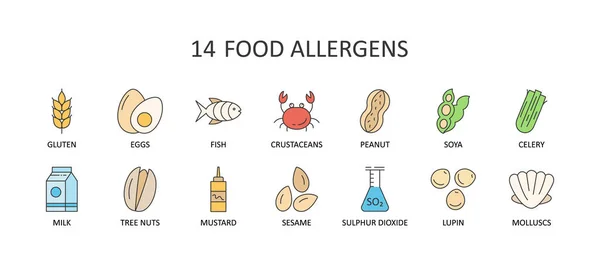

Allergens are substances (often proteins) that cause an allergic reaction or other hypersensitivity, such as celiac disease (gluten intolerance) and lactose intolerance. There are 14 ingredients or substances that cause the most serious allergic reactions, and they are listed in Annex II to EU Regulation No. 1169/2011. When discussing specific allergen testing for foods, it is usually for an allergen included on the list.
The testing methods used for allergen control in food and production areas can be divided into four groups:
- LFD(Lateral Flow Devices)
- ELISA(Enzyme-Linked ImmunoSorbent Assay)
- PCR(Polymerase Chain Reaction)
- MS (Mass Spectrometry)
LFD tests
Alertox

Benefits of AlerTox® Sticks:
- Fast and reliable results in 10 minutes
- No cross-reactions
- Sensitive, 1–20 ppm depending on the allergen
- Easy to use
- No additional lab equipment is required; everything you need is included in the kit
- Long shelf life: 6–18 months
Examples of Alertox (environmental samples, solid food samples):


GlutenTox
GlutenTox® Pro is a user-friendly LFD kit for food, beverages, and surfaces. GlutenTox® Pro contains the G12 antibody, which specifically recognizes the 33-mer peptide—the gluten fraction that triggers a reaction in people with celiac disease.
GlutenTox® Pro is designed for restaurant kitchens, cafeterias, catering companies, and food manufacturers that work with ingredients and products that may contain gluten. It is ideal for environments that receive incoming ingredients and share facilities, and helps ensure the safety of the final products.
GlutenTox® Pro benefits:
- Detects gluten from wheat, barley, rye, and oats
- Adjustable sensitivity: 5, 10, 20, 40 ppm gluten
- Long shelf life
- Results in less than 20 minutes
- No additional lab equipment is required; everything you need is included in the kit
- Convenient and quick testing requires minimal training
- Cost-effective


Watch Hygiena’s informational video, which explains the principle behind LFD and highlights important factors to consider that can interfere with LFD, such as the Hook effect:
3M™ Allergen Protein Test
3M™ Allergen Protein Tests are a series of LFD Lateral Flow Device) tests for the most common types of food allergens. 3M’s tests are available for almond, milk,cashew, coconut, egg, fish, gluten, hazelnut, peanut, pecan, pistachio, soybean, and walnut.
The test format consists of plastic strips and can be used for both environmental samples and food products. Positive results are indicated by the appearance of three lines: a control line, a hook line, and a test line, when the target protein is present within a defined concentration range. These limits vary depending on the specific allergen test, and the detection limit may vary depending on the matrix being tested. Samples containing large amounts of the target protein may result in an invalid test, which will result in the absence of the hook line and/or the test line.
The tests require minimal prior knowledge and take only a few minutes to complete. Each package contains 25 allergen tests.Swabs for environmental samples and transfer pipettes are sold separately.

Benefits of 3M® Allergen Protein Tests:
- Results are visible 11 ± 1 minutes after applying the sample
- The sensitivity ranges from 0.5 ppm to 5 ppm, depending on the allergen
- Easy to use
More information
For more information about our allergy tests and prices, please visit our online store. You can also contact Frank Axelsson at 0707 912103 or [email protected]